The Judges of the King’s Bench Division created the Commercial Court without making any changes to the Rules of the Supreme Court which governed civil litigation in the High Court: no new rule was introduced, and none of the existing rules were altered.
This had not been the original plan: the moving minds behind the Court had intended that it should be built on the firm foundations of a dedicated new rule. But that idea ran into the sands when the Rules Committee proved incapable of reaching consensus on what the prospective new addition to the RSC should say. So, instead, the Notice As To Commercial Causes which was issued on 6th February 1895 established a procedural framework for dealing with commercial cases within the confines of the existing rules. This approach rested on the premise that the notorious delays and inefficiencies which had increasingly afflicted not only commercial cases but virtually all civil litigation since the Judicature Acts in the 1870’s were attributable less to the rules themselves than to the unimaginative and inflexible way in which the judiciary applied them. Bad habits had solidified across all Divisions of the High Court’s, and Judges had become accustomed to following the same standardised, ponderous, and mechanistic procedures in every case, regardless to sums at stake, the nature or complexity of the subject-matter, or the needs of the litigants.
The Notice made clear that the Commercial Court would exploit procedures and judicial discretions which were already present, though hitherto largely latent, within the existing rules in order to dispose of commercial cases quickly and economically, enabling commercial litigants to conclude their disputes and close their accounts with the minimum practical delay and at the lowest practical cost.
From the outset, the Court dispensed with the usual two-tier approach to interlocutory orders, in which an initial decision by a Master (a junior judicial officer) could automatically be completely re-opened on appeal to a Judge. The procedure prescribed in the Notice bypassed the Master altogether, eliminating an entire layer of time and cost. Instead, all interlocutory matters went direct to a Commercial Judge. And, in another departure from the norm, the Judge aimed to deal with all matters of pleading, disclosure, evidence, and timetabling of preparation for trial in a single hearing on the summons for directions. This streamlined process is now standard across the civil Court system. But, outside the Commercial Court, it was the norm late into the 20th Century for the parties to have to return to Court for a new hearing at eachindividual interlocutory stage of a case.
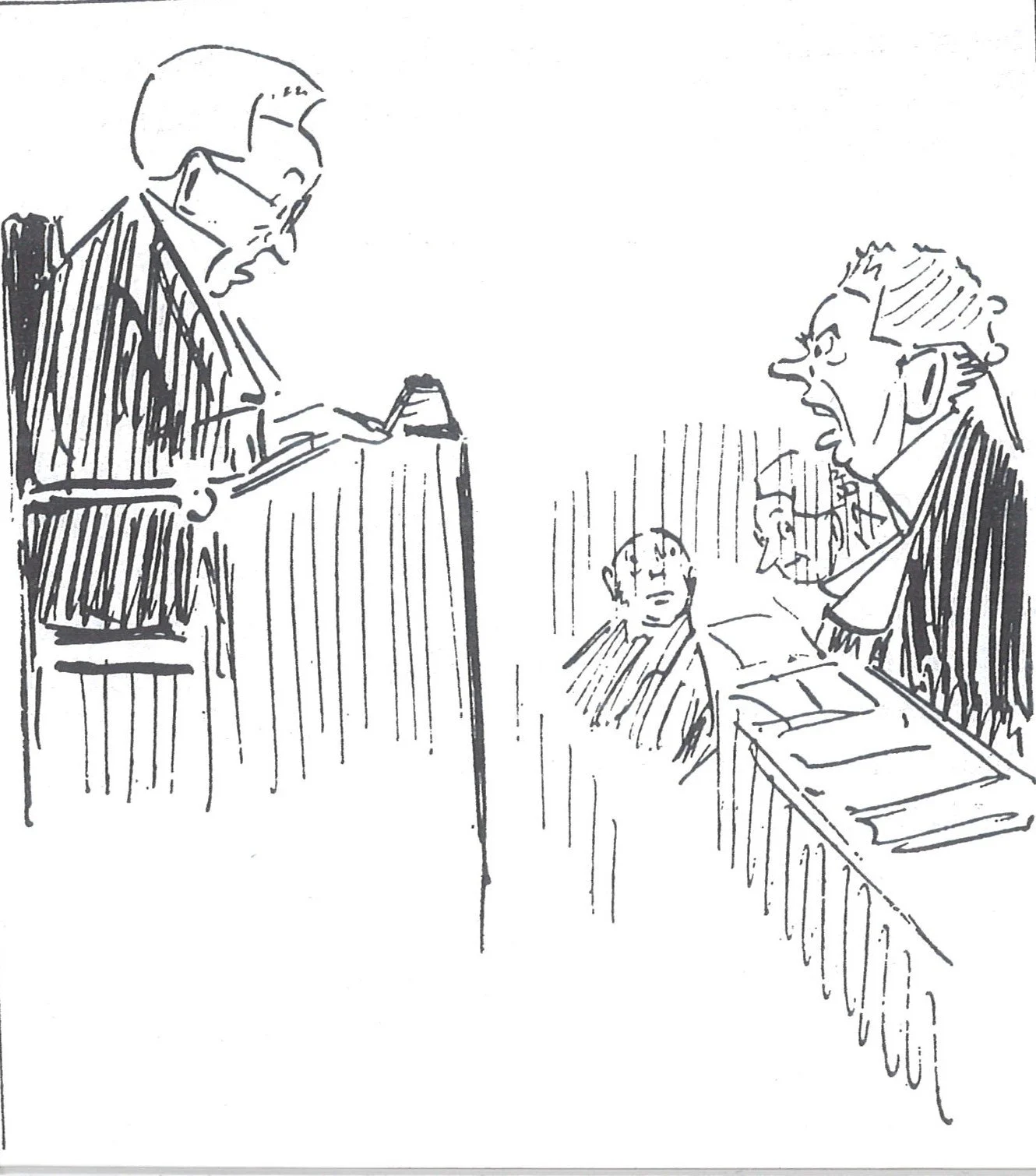
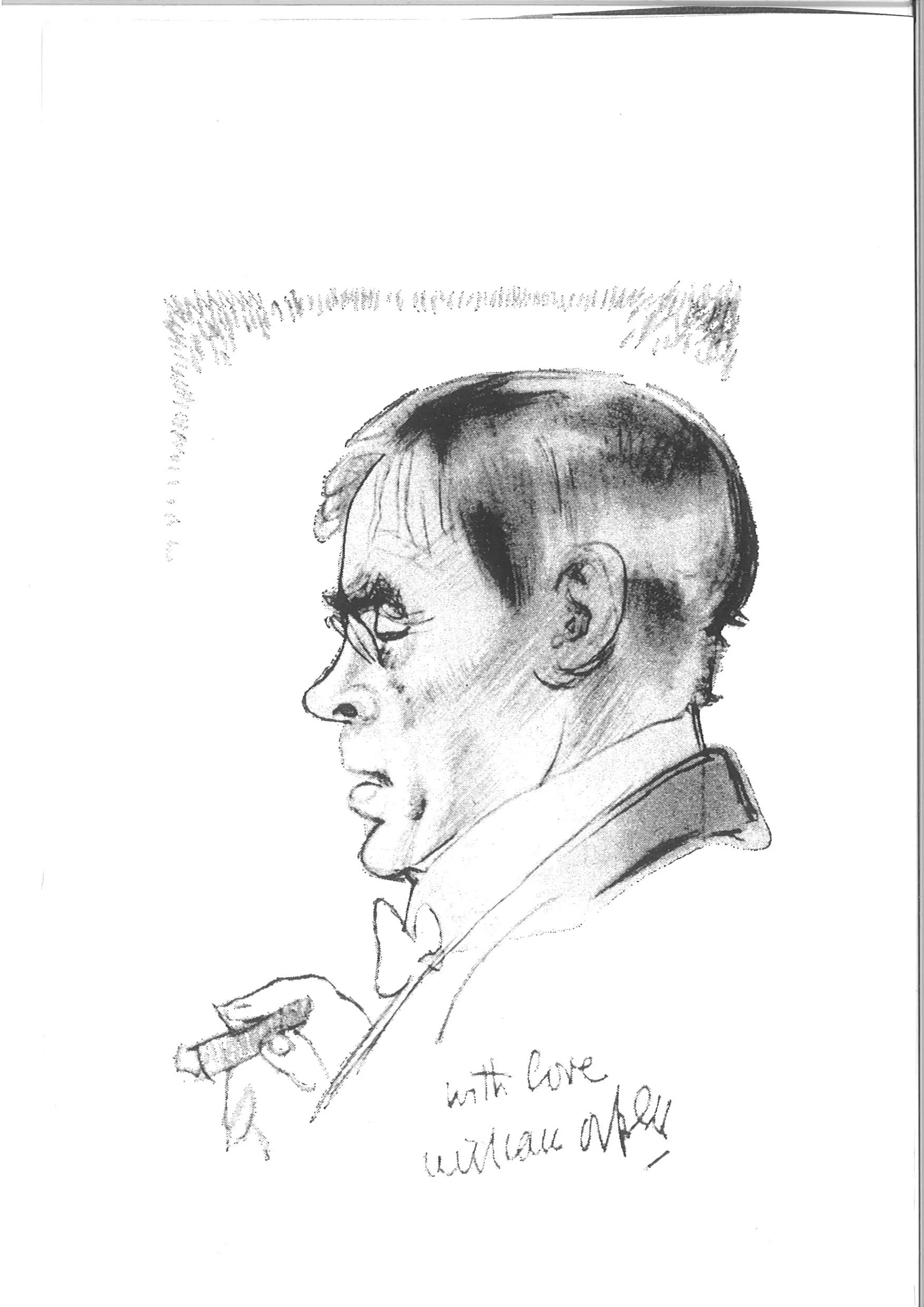
Still in print, Theo Mathew’s ‘Forensic Fables’ were a greater publishing success than ‘The Practice Of The Commercial Court’.
The first Commercial Judge, the energetic J.C. Mathew, was vigorous in putting the spirit behind the Notice into practice. He was quick to identify preliminary issues or points of law which had the potential to dispose of the whole case without the need for a full trial of all of the issues. He “encouraged” litigants to dispense with the strict rules of evidence, for example by agreeing that correspondence and documents could be treated as evidence of their contents, without having to go to the formality and expense of calling a witness at trial to prove them. He directed counsel to confine their pleadings to brief “Points” of Claim and Defence which focussed on the key facts and issues and ignored irrelevancies. And he set down abbreviated timetables to bring cases towards a speedy trial, based on a model form of order on the hearing of the summons for directions.
The current version of the Commercial Court Guide is the 11th Edition, as revised in 2023. Click on the image above to open it.
The upshot was that, while the Commercial Court formally remained governed by precisely the same set of rules as the rest of the High Court, it rapidly acquired a more or less unique body of practices and procedures of its own. And, since the Court’s special ways of doing business were not written down, other than in the fairly broad terms indicated by the Notice As To Commercial Causes itself, they were a potential trap for any unwary practitioner who was not already familiar with them from previous experience.
Mathew’s own son Theo, who practised as a barrister in the Court in its early years, and was the first editor of the ‘Times Reports Of Commercial Cases’, spotted that this opened a potential gap in the legal textbook market. In 1902, he published ‘The Practice Of The Commercial Court’, which explained the typical life-cycle of a Commercial Court case, from issue of the writ to final judgment and assessment of costs.
Theo’s book appears to have had a limited impact on the world of legal publishing, and there was no 2nd edition under his authorship. This may have been because the Commercial Court quickly acquired its own specialist Bar: the number of practitioners who appeared in the Court without already knowing how it operated must have been relatively small. (Theo himself drifted away from commercial practice as the 20th Century progressed. He ultimately settled down as a defamation specialist whose pupils included Lord Diplock, Lord Hailsham, and Clement Atlee. He is best remembered today as a raconteur, humourist, and author of the comedic ‘Forensic Fables’.) But ‘Mathew’s Practice Of The Commercial Court’ was revived by future Commercial Judge Anthony Colman in 1967, just as the Court’s workload was expanding after a long fallow period. The Mathew association disappeared when a new edition was published in 1983 as ‘The Practice & Procedure Of The Commercial Court’, with Colman as sole attributed author.
In 1986, however, the Court itself stole Colman’s thunder by publishing its own official ‘Guide To Commercial Court Practice’. The 1st Edition, which was greeted with both “some reservations” and “overwhelming endorsement”, ran to only around a dozen pages, but contained early references to phenomena which subsequently became standard features of litigation not only in the Court itself, but across the civil court system: skeleton arguments for hearings and trials, and service of witness evidence before trial by exchange of witness statements and expert reports.

‘The Guide’ expanded gradually over subsequent editions, as the content became more comprehensive. Then, like everything related to civil litigation in England & Wales, it suddenly mushroomed alarmingly with the introduction of the new Civil Procedure Rules, more than doubling in size from the 4th Edition to the 5th, which approached 100 pages. To some extent, this presumably reflected the foundational tenet of the Woolf Reforms that, to make civil procedure simpler and cheaper, it was first necessary to make it vastly more complicated and expensive. But there was also a sense of judicial reaction to the CPR’s philosophy that every case in every court should be governed by the same procedure. That sort of thinking had been responsible for the crisis which had led to the creation of the Commercial Court in the first place, and ‘The Guide’ made clear that the Court would continue to manage commercial litigation using established techniques which had proven to be efficient and cost-effective.
But although the modern ‘Guide’ is a weighty tome, it still retains something of the spirt of the one-page Notice As To Commercial Causes of 1895. Although the Court does now have its own special place in the modern Civil Procedure Rules, many of the practices described in the ‘Guide’ still rest on the creative application of rules which apply to the whole of the High Court. And the ‘Guide’ is only a guide: although it reflects the way in which the Court will typically deal with a case, it does not have binding effect, and the Commercial Judges retain a discretion to tailor the procedure to the specific requirements of the particular case when appropriate, just as J.C. Mathew did in the 1890’s.