Peter John Cresswell was a modern Joseph Walton: a brilliantly successful advocate who became Chair of the Bar and seemed predestined for an equally stellar career on the Bench, but whose judicial performance fell short of expectations because his painstaking approach to adjudication too frequently tempted him to cross the line between conscientiousness and indecisiveness. Still, to emulating Walton exceeds anything which most barristers can hope to achieve: and if the second part of Cresswell's career was ultimately disappointing in comparison to the first, that simply emphasises the heights to which he rose at the Bar.
Cresswell was born in the famed rugby-playing town of St Helens on 24th March 1944, just as the RAF and 8th Air Force launched a co-ordinated day/night attack to flatten Munich, though his family soon moved to Iver in Buckinghamshire, not far from Bomber Command's High Wycombe headquarters. He was the eldest of two children of Church of England clergyman Reverend Jack Cresswell and his wife Madeleine. Jack and Madeleine passed their Anglican faith on to Cresswell and his sister. Madeleine also gave her son a lifelong love for fishing, which she taught him on family holidays in the Lake District. Cresswell went to school at St John's in Leatherhead, which had originally been established specifically for the education of sons (only) of Church of England clergy. After St John's, where he was unhappy, he had a better time studying law at St John's College, Cambridge where he became president of the Golf Society. Cresswell was known to demonstrate his close-range skills by chipping a ball over the roof of one quad and into the next, which suggests a lively, fun-loving side to his character for which he is seldom given credit. He was not quite good enough a golfer to win a full Blue playing for the University's first team, but he did turn out for the seconds, "the Stymies". He does not seem to have taken to rugby.
Called to the Bar by Gray's Inn in 1966, Cresswell joined the chambers which is now 3 Verulam Buildings in the same Inn, although its home at that time was at 1 Harcourt Buildings in the Temple. Cresswell himself was one of the main driving forces behind 3VB's rise to prominence and dominance in banking and financial services litigation. But it had started out as a criminal set, and it had a broad common law profile when Cresswell became a tenant.
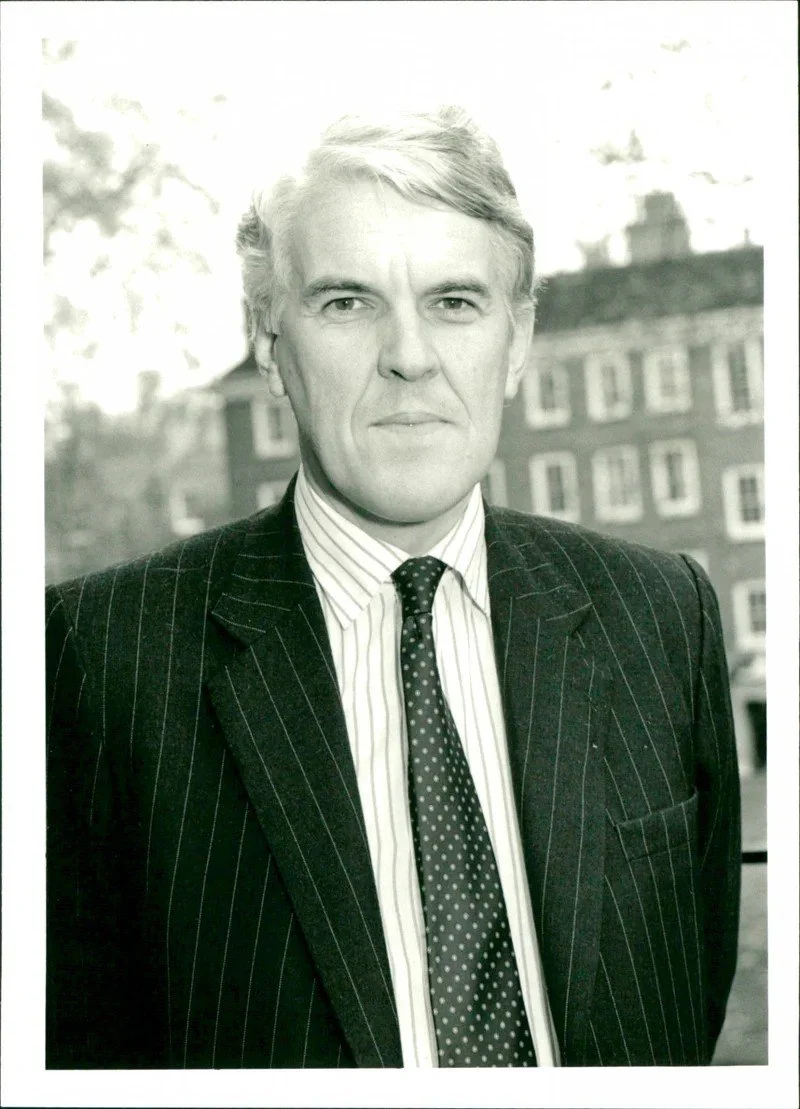
Cresswell’s earliest reported cases were a broad mix, including authorisation and approval of a settlement of thalidomide claims (Re Taylor's Application [1972] 2 QB 369), civil liability for negligent driving (Young v Chester [1974] RTR 70, in which he was led by chambers colleague and future Commercial Court Judge Andrew Leggatt), and criminal liability for drunken driving (Gabrielson v Richards [1976] RTR 223). Banking matters of a sort featured in R v Meech [1974] QB 549, in which Cresswell represented one of a group of defendants who had staged a fake robbery as a way of disposing of the proceeds of a stolen cheque. But Cresswell did not feature regularly in reported civil cases about banking transactions until towards the end of the 1970's. His most high-profile cases before that were in two successful libel actions: first, for the actress Charlotte Rampling against The 'Daily Express', and second for a fashion writer against 'Private Eye', with both cases involving unfounded suggestions of loose sexual morals.
But once Cresswell had his first experience of banking litigation, he did not look back. Edward Owen v Barclays [1978] QB 159 was one of the earliest English cases to analyse the legal nature of performance bonds, which were becoming an increasingly popular method of payment in international sales. Michael Kerr in the Commercial Court, and then Lord Denning's Court of Appeal, agreed with Cresswell and his leader that bonds are "autonomous instruments" which operate independently of the underlying transaction, and that an injunction should only be issued to block payment if there is clear evidence of fraud. These remain fundamental principles of performance bonds, demand guarantees, and similar documents. Owen was quickly followed by the equally significant Simms v Cooke [1980] 677, in which Cresswell's client bank had honoured a cheque after overlooking its customer's instruction not to pay. Robert Goff held that the bank was entitled to recover the money on the grounds that it had paid by mistake, making Simms an important case in the development of the modern law of restitution. By the end of the 1970's, Cresswell was branching out into other aspects of financial services, such as share transfers in Stanley Yeung v HSBC [1981] AC 787. Even in cases which involved some other area of law, such as employment and industrial disputes, or immigration, his clients now tended to be banks. Cresswell's status as a banking and financial services specialist was reinforced by the appearance of 'The Encyclopaedia of Banking Law', of which he was the principal founding editor. He headed the writing team well into the 21st Century, and the text is still published today. In 1993, a year after the launch of 'The Encyclopaedia' and a year before his fortieth birthday, Cresswell became an unusually young Queen's Counsel.
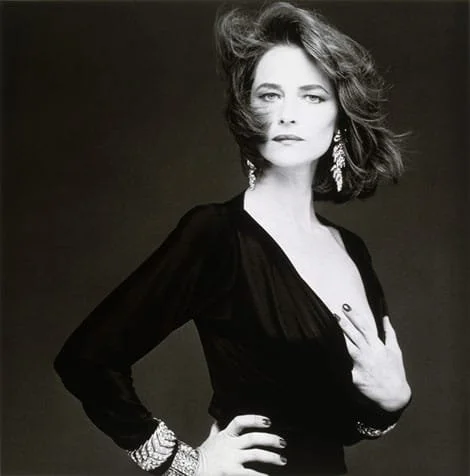
Charlotte Rampling, Cresswell’s early libel cases were sometimes a little more glamorous than the banking disputes which became his speciality.
The pace of Cresswell's meteoric progress towards the High Court Bench meant that he was a QC for only seven years, and he dedicated a fair proportion of that time to the Bar Council and other professional organisations. But he still managed to appear in a string of significant cases. He revisited the developing law of performance bonds in United Trading v Allied Arab Bank [1985] 2 Lloyd's Rep 554 and IE Contractors v Lloyds [1990] 2 Lloyd's Rep 496, and acted for the receivers of the National Miners' Union in the repatriation of £5 million which had gone absent from the Union's account and turned up in Luxembourg. He also branched out into the private and public international law dimensions of banking litigation. The issue in Libyan Arab Bank v Bankers Trust [1989] QB 728 was whether a US bank's London branch must obey the payment instructions of a Libyan customer when doing so would be a breach of US sanctions. Cresswell convinced Christopher Staughton in the Commercial Court that US law was irrelevant to the contractual relationship, and that the bank must pay. He repeated the result for the same client against a different defendant in Libyan Arab Bank v Hanover Trust. By contrast, the problem in GUR v Trust Bank [1987] QB 599, which concerned a construction project in Ciskei, was more diplomatic than contractual. When the project descended into to litigation in England, Cresswell's banking client wished to join the state of Ciskei as a third party. Ciskei had been granted independence by South Africa in 1981, but had never been recognised by the UK government. Johan Steyn ruled that this meant that it could neither sue nor be sued in England, but Cresswell persuaded John Donaldson's Court of Appeal to overrule him.
Cresswell stepped away from banking in Peco Arts v Hazlitt [1983] 1 WLR 1315, which concerned the fallout from the sale as an original of what turned out to be merely a copy of a chalk drawing by J.A.D Ingres. Cresswell did not go on to develop what would now be called an "arts law" practice, but he did briefly return to his old libel practice in Pamplin v Express Newspapers [1988] 1 WLR 116, where he turned defeat into victory. The plaintiff had been criticised in the press for registering the family car in the name of his son, to whom any parking tickets were duly sent, but who was below the age of legal liability, so that the fines went unpaid. The plaintiff won at trial, but the jury awarded him only ½ pence damages, which meant that he was at risk of having to pay all of the costs. Cresswell satisfied the Court of Appeal that the result must stand, notwithstanding imperfections in the Judge's directions to the jury.
As is almost invariably true, Cresswell's success at the Bar depended on hard effort as much as (or even more than) any natural flair for advocacy. He put in punishing hours, prepared thoroughly for every hearing, and had a relentless eye for fine detail. One of his juniors remembered being dispatched to review every available authority on a particular topic to guarantee that no possible argument was overlooked. (This including unearthing unreported cases, which could then usually only be obtained at considerable effort and cost using a fledgling – and noisy – electronic database operating over a telephone line.) This work ethic was paired with physical attributes useful for an advocate: Cresswell was tall and well built, with a distinguished appearance which was enhanced by a head of grey hair, and a clear and pleasant voice. All of this made for an imposing presence in the courtrooms and arbitration centres of England & Wales and well beyond: Cresswell was in demand for court work in Hong Kong and Singapore, and for arbitration in numerous jurisdictions.
Cresswell's Anglican upbringing left with him with a strong sense of public service, and his professional horizons extended beyond the confines of his own practice. He was active in the Inns of Court and the London Common Law & Commercial Bar Association (now the London Bar Association), of which he became Chair. He was also Chair of the General Council of the Bar in 1990, at a time when the profession faced hard challenges in a political climate which favoured deregulation of the professions. Cresswell spoke out (in vain) against the government's plans to grant solicitors rights of audience in the higher courts. But he was no mere Luddite: he recognised that the Bar needed to modernise and improve its public, and supported initiatives to improve training and financial support for students and pupils, with the ultimate goal of widening the pool of entrants. In a "Four Point Plan For Justice", Cresswell called for a massive increase in Legal Aid spending (which did not happen) and increased use of alternative dispute resolution (which did). He was Chair when the Bar adopted a new Code of Conduct which, among other radical innovations, permitted barristers to visit their instructing solicitors' offices and business cards and other publicity material.
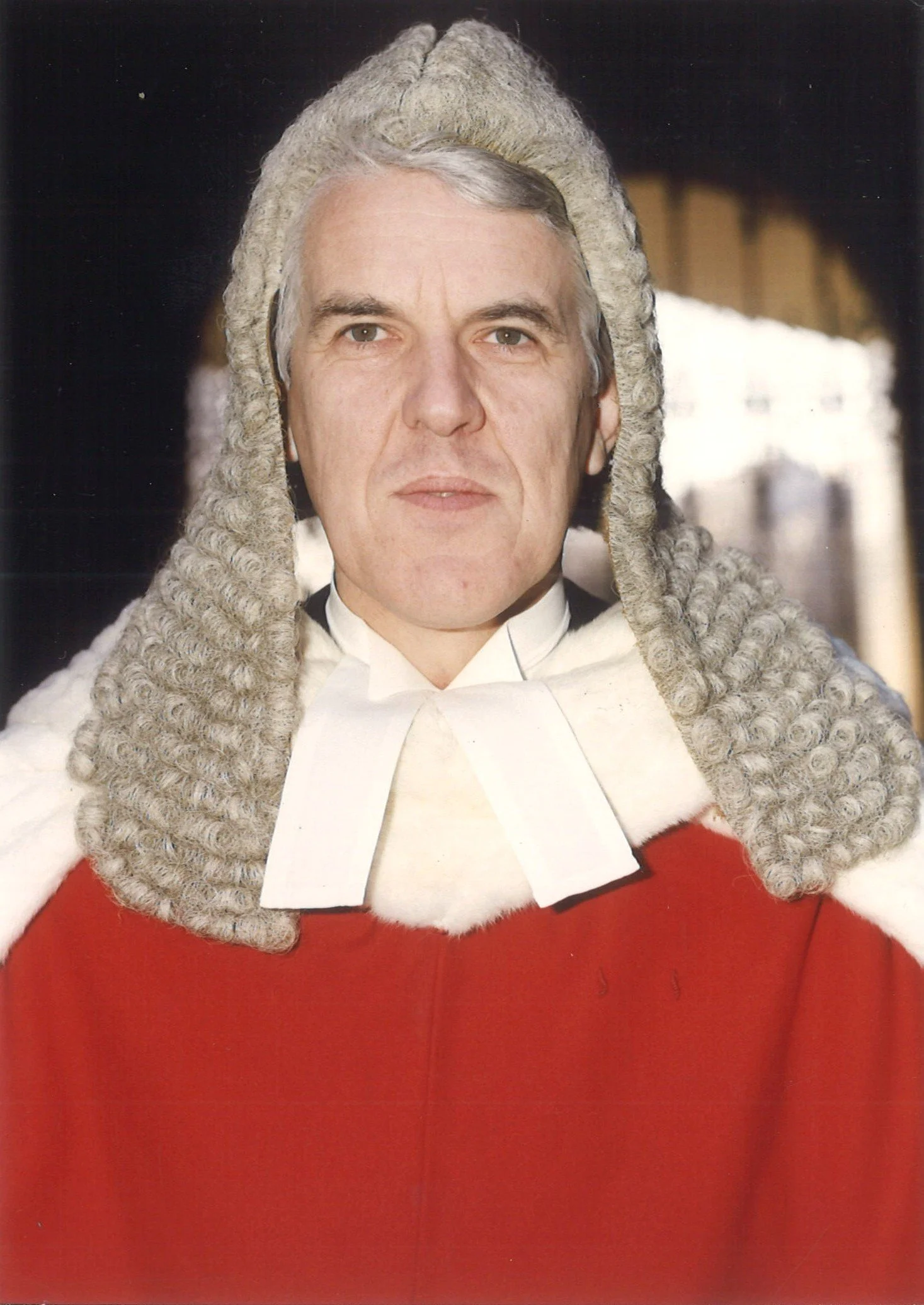
In an age before the Judicial Appointments Commission and the strenuous round of application forms, interviews, and role-play which confronts today's judicial candidates, it was customary for the outgoing Chair of the Bar to be offered a place on the High Court. Cresswell duly received the tap on the shoulder in early 1991 when he was only forty-six. This was the same age that John Donaldson and Thomas Bingham had been on judicial appointment, and it was still strikingly young. The informal selection process was not entirely indefensible, even if it lacked rigour by modern standards. Cresswell had become Chair of the Bar by election, demonstrating that he enjoyed the confidence of his fellow barristers, and it was unlikely that the whole of the profession was wrong about his qualities. But the qualities for success as an advocate did not always coincide with those for eminence as a judge, and Cresswell, like Walton, found the attention to detail which had been a strength at the Bar a handicap on the Bench. He had an imaginative capacity for seeing every possible angle of any argument, sometimes worrying tenaciously at points which counsel had thought were not worth pursuing. At the Bar, Creswell had had juniors to help him to mine the minutiae. On the Bench, if he wanted to pursue a point beyond counsel's argument, he was on his own. His constitutional inhibition against reaching a conclusion without thinking every aspect through to the end sometimes made it difficult for him to resolve even purely procedural points, where the decision had relatively little practical significance. The burden of deciding complex issues of fact or law which would determine the outcome of the entire case frequently appeared to agonise him.
Cresswell's reputation for what impatient practitioners and clients regarded as dithering was already firmly entrenched when 'Legal Business' conducted a famous (or infamous) survey of the legal professions in 1994 to identify the most and least respected serving Judges. One wit claimed that, if Caroline Cresswell offered a choice of breakfast cereal, her husband was still at home trying to his mind up when the parties filed into Court. But some spoke up for Cresswell's courteous courtroom manner. And he fared distinctly better than judicial colleagues (none of them from the Commercial Court) who were hailed as "the worst judge in the country, he has reached unparalleled depths of awfulness"; "pompous, bullying, weak"; and "an ordeal to have to appear before". To his credit, Cresswell was the only Judge who deigned to speak to the magazine. He made the entirely fair point that Commercial Judges had a heavier workload than any others, and justified his hesitant judicial style on the grounds that it reflected care and attention, not indecision. But this defence, though sincere, did not entirely convince: there were around a dozen other Commercial Judges, all conscientious, but none of them struggled to anything like the same extent to make up their mind.
But it would be wrong to think that, because Cresswell did not bestride the courtroom as a Judge in the same way that he had done at the Bar, he was a judicial failure. In fact, he was good enough to be made Judge In Charge Of The Commercial Court in 1993, always a demanding post, and all the more challenging for someone who was still comparatively new to the Bench. But Cresswell remained as hard-working and committed as he had been at the Bar. As Judge In Charge, he took on the management of the sprawling Lloyd's Litigation which pitted "Names", the private individuals who underwrote Lloyd's policies, against the market professionals and Lloyd's of London. When things went well, the Names shared the profits and made very good returns. But when they went badly, the Names' liability was unlimited. Things had gone very badly indeed in the 1980's as a result of an explosion of asbestos-related claims and a series of man-made and natural disasters. The actions which the Names brought in the aftermath were so numerous and so large that they threatened to overwhelm the Commercial Court's resources unless they were carefully monitored. Cresswell kept them on course, dealing with the host of procedural points which had to be sorted out to get them fit for trial. The Lloyd's Litigation produced some of the biggest and most complex cases the Commercial Court had ever tried. Cresswell himself tried one of the most prominent of them, Jaffray v Lloyd's (2000), in which some of the most aggrieved Names, rejecting settlement proposals which most others had accepted, contended that their participation in the market had been procured by outright deception. Although Cresswell found that the Names had not been defrauded, he castigated "the catalogue of failings and incompetence in the 1980s by underwriters, managing agents, members' agents, and others" as "staggering" and as having "brought disgrace on one of the City's great markets", demonstrating that, once he did form a view, he was quite capable of expressing it in emphatic terms. His decision was affirmed on appeal.
As a Commercial Judge, Cresswell inevitably encountered cases outside his prior experience as a banking specialist. He tackled a technical reinsurance dispute in Hill v Citadel [1995] Lloyd's Reinsurance Law Reports 218 (his decision was upheld in the Court of Appeal), and bill of lading, charterparty, and other issues in a number of shipping cases, including The 'Eurasian Dream' (No 2) [2002] Lloyd's Rep 692, which raised the novel question of whether a "success fee" payable in relation to salvage and general average assistance following a marine casualty was unenforceable because it contravened English law principles of champerty and maintenance (Cresswell held that it was not). There were probably fewer banking cases in the Commercial Court during Cresswell's time than he would have liked, but BCCI v Sonali [1995] 1 Lloyd's Rep 227 was eye-catching for the identity of the claimant, although the points for decision turned on proper law and jurisdiction, and did not directly involve the BCCI scandal itself.
Cresswell took on more than a fair share of the criminal caseload in which all Queen's Bench Judges were expected to participate, both at trial and in the Criminal Division of the Court of Appeal, where he sat on more than four hundred appeals. He also sat on more than twenty appeals in the Civil Division, helping the Court of Appeal to get through its workload in busy periods and expanding his range into employment, landlord and tenant, housing, and even Rylands v Fletcher liability (Transco v Stockport [2004] 2 AC 1, in which the joint judgment was upheld in the House of Lords). But he did not venture into the Administrative Court, and generally avoided areas of civil litigation outside the Commercial Court.
The refrigerated cargo carrier ‘Ikarian Reefer’ was built in Spain in 1968, and destroyed by grounding and fire off Sherbro Island, Sierra Leone, in 1985. The subsequent litigation over whether the loss was accidental or deliberate was both a highlight and a low-point of Cresswell’s judicial career.
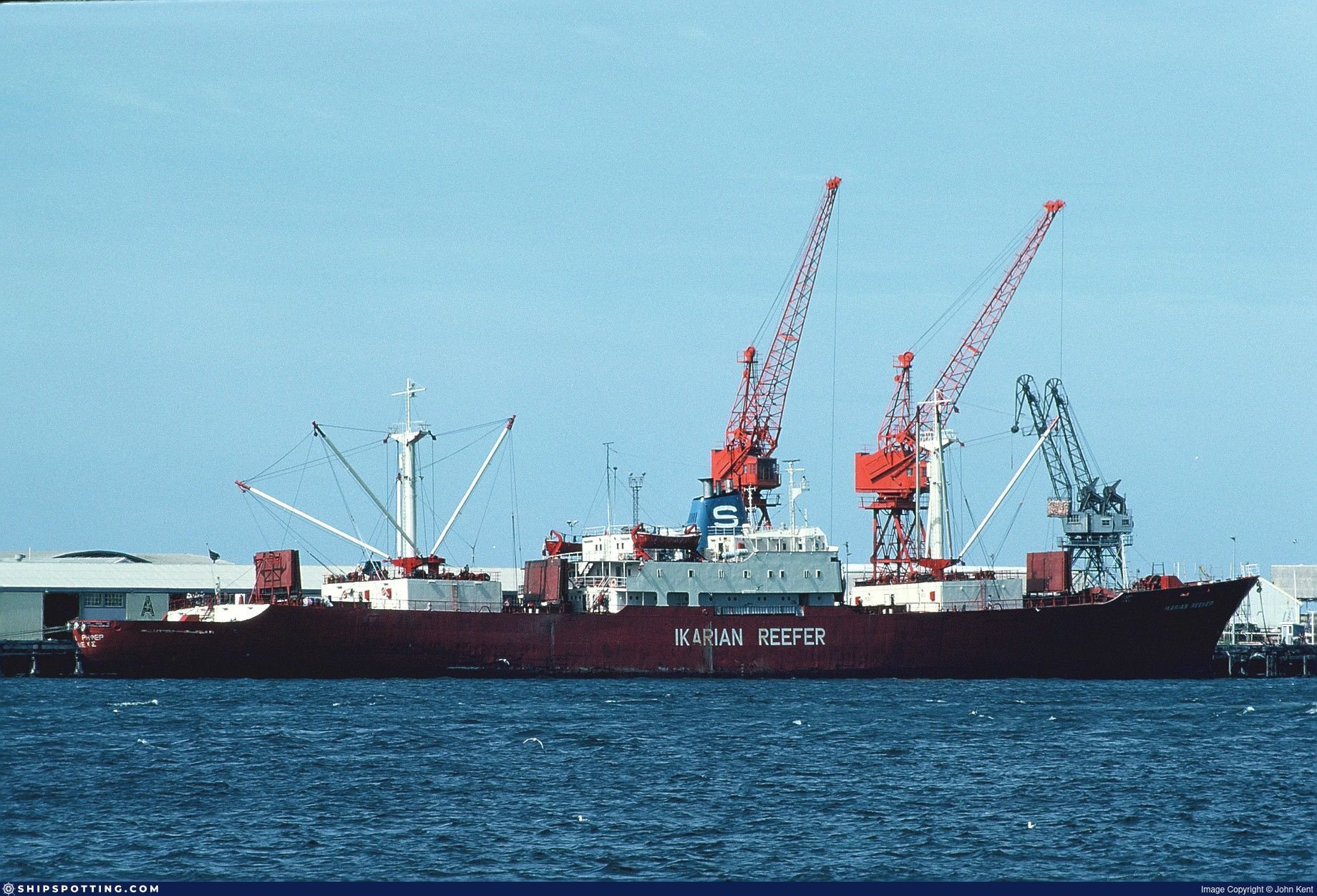
More of a practical trial Judge than a speculative jurist, Cresswell made little impact on the development of substantive English law. Yet his judicial angst was an unwitting spur to procedural innovation. To make sure that his analysis was focussed on the core dispute, he formed the habit of requiring counsel to prepare agreed memoranda stating what facts were common ground and which of the contentious issues really mattered. When other Judges took this idea up, it evolved into the Case Memorandum and List Of Issues which are now key features of case management in the Commercial Court. Cresswell was similarly prone to asking for agreed statements of the relevant legal principles, and these sometimes appeared in his judgments in a polished form which was adopted by other Judges as a helpful summary of the existing law on a particular point. The most important example was his overview of the duties of expert witnesses in The 'Ikarian Reefer' [1993] 2 Lloyd's Rep 68, which was later routinely cited in Commercial Court cases which turned on expert evidence, and remains the bedrock of the statement of experts' duties in the Civil Procedure Rules.
Ironically, however, the case in which Cresswell made his most enduring legal contribution was also the occasion for his most serious judicial setback. The 'Ikarian Reefer' was a marine insurance action in which the key question was whether the loss of the ship off Sierra Leone had been an accident or a deliberate scuttling by the owners in order to claim on the insurance. After an eighty-eight day trial, Cresswell declared that the owners' key factual witnesses had been honest; that the casualty had been accidental; that, even if the crew had deliberately scuttled the ship, the owners had not been involved; and that the owners' claim succeeded. After a further thirty days of hearings, the Court of Appeal held that all of these conclusions were wrong. It was a comprehensive overruling in the biggest, and most expensive, Commercial Court shipping case for years. The Court of Appeal tried to cushion the blow by expressing sympathy for a trial Judge who, it said, had been "overwhelmed by a plethora of expert evidence", much of which was largely irrelevant. But it was said that Cresswell was so mortified that he offered to resign, only to be told that such setbacks were a part of judicial life, and that he must bear up. This scarring experience can only have exacerbated Cresswell's decision-making inhibitions.
Cresswell did resign in the end, but not until early 2008. Since he was not yet sixty-three, it was hardly retirement, and he had a good few active years after stepping down from the English Bench. In October 2008, he was dramatically propelled onto the Grand Court of the Cayman Islands, in the midst of a constitutional emergency. Alexander Henderson, one of Cayman's permanent Judges, had found himself arrested in the car park early one morning by officers seconded from the Metropolitan Police to conduct Operation Tempura, an anti-corruption investigation. Cresswell's mission was to conduct a judicial review of the issuing of warrants to search Henderson's home and office (no existing Grand Court Judge could conduct the hearing, because they all knew Henderson personally and professionally). He concluded that the warrants were irregular and that the searches were illegal. Tempura was wound down with no-one charged, let alone convicted, but millions spent, including a substantial compensation payment to Henderson. Cresswell was invited to stay on in the Grand Court as one of the part-time Judges who supported the small full-time Bench. He put his Commercial Court experience to good use in helping to establish the Grand Court's Financial Services Division, and he sat in Cayman until 2014. He received a mild rebuke from the Privy Council in Almazeedi v Penner [2018] UKPC 3 for failing to stand down from a Cayman case in which there was a risk of apparent bias. Lord Sumption, who dissented, described the complaint against Cresswell as "fantastic" (he did not mean that it was exceptionally good), and even the majority emphasised that there was no suggestion of actual bias, and that Cresswell was a "distinguished" judicial figure.
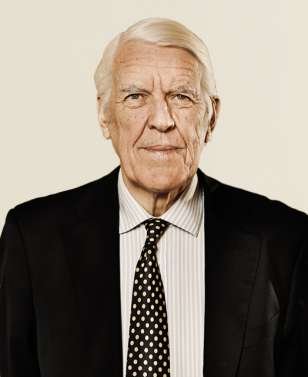
Cresswell “in retirement”: no longer a Commercial Court Judge, but still active in the law in a variety of jurisdictions.
Cresswell was also a Judge of the Qatari International Court from 2012 to 2021 (it was this Qatari connection which caused the problem in Almazeedi), and he sat as an arbitrator when his jetsetting international judicial commitments permitted. He also participated in a significant number of cases in the Criminal Division of the Court of Appeal after 2008. But he never sat again in the Commercial Court.
Peter Cresswell married Caroline Ward in 1972. They had known each other since childhood, and so Caroline was aware of, and apparently also wary of, Cresswell's devotion to golf and fishing. Seemingly suspicious that the combination of his hobbies and his career might prove too much of a distraction from the responsibilities of family life, she reputedly delivered an ultimatum that he must abandon either golf or fishing before she agreed to marry: so golf was sacrificed.There were two sons of their very happy marriage. But, by a grim coincidence, Peter and Caroline both carried a recessive gene which significantly increased the risk of cystic fibrosis for any children. Their eldest son, Oliver, died from the disease in 1988, aged only thirteen. A devastated Cresswell fought back from that tragedy only to suffer another when Caroline died from spinal cancer in 2003: she was fifty-two. The blow was severe, but, in his later years, Cresswell found renewed happiness with Canadian artist Pamela Montgomery, whom he met Cayman.
After the enforced abandonment of golf, Cresswell’s principal private passion aside from his family, was fly-fishing. He fished both rivers and open water: the Test, conveniently close to his home in Hampshire (he was Deputy Lord Lieutenant in 2008), the Spey, the Tweed, and the lochs of the Outer Hebrides were favourite locations. Cresswell loved not only the challenge of landing a catch and the tranquil surroundings, but also the social side, and he was President of the Flyfishers' Club from 2003-2005. The love of fishing and landscape inspired an interest in river management and conservation, and the accumulation of an enormous, and ever-expanding, collection of old salmon flies. Cresswell was also for many years a trustee of the Cystic Fibrosis Trust, which funds research into treatment of the disease which killed his eldest son, and provides assistance and support to sufferers.
Peter John Cresswell died on 10th September 2025. Footage of him taken in retirement remains available to watch on YouTube.